

Success in the modern digital economy requires much more than strategic brilliance or innovative products. It also relies on the degree to which a firm protects its digital underpinnings. Cybercrime is growing at unprecedented velocities, and business cybersecurity is now an absolute necessity for mere survival. Whether it is a global conglomerate that has been hit with ransomware attacks or small businesses which are targeted by phishing operations, no firm is safe.
Cybersecurity is a lot more than gateways and antivirus programs. It is the breath of trust for customers, protection for the sensitive, and the end to almost all growth plans if a single breach occurs.
The Expanded Role of Cybersecurity in Business
The contemporary business environment is based on interconnectivity. Businesses today operate on cloud systems, share offices with work-from-home employees, and receive pay through online payment systems. All this innovation brings the world to one’s fingertips—and those of cybercriminals.
Each data transfer, e-commerce transaction, and logon attempt is an exploit. One vulnerability is enough to wreak havoc. Recent statistics put the cost of a 2025 breach globally at over $4 million, excluding the irrevocable harm to reputation. And regulatory fines and legal proceedings are just the icing on the cake.
That’s why information security has become a boardroom to IT department relocation. It is now a business strategy hub, on the same list as innovation or customer service.
The Most Significant Cyber Threats Which Today’s Companies Must Endure
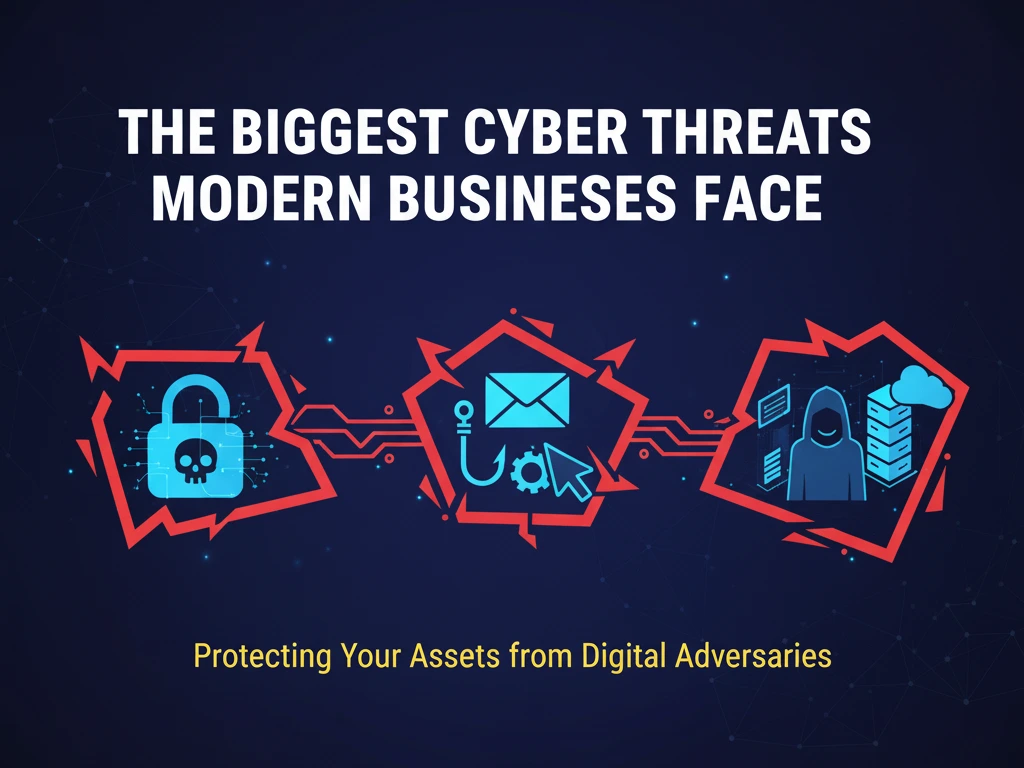
Companies are exposed to all kinds of cyber threats on a daily basis, but there are some which have been especially crippling:
-
Phishing and Social Engineering
Hackers impersonate known contacts in a scheme to deceive employees into providing passwords or business information.
-
Ransomware Attacks
Malware locks up systems for money to be paid, grinding normal business to a halt.
-
Data Breaches
Stealing confidential information such as financial information, trade secrets, or customer information typically leads to lawsuits and long-term loss of confidence.
-
Insider Threats
Employee mistakes or malicious actions can unintentionally leave openings for attackers.
These attacks present an unpleasant reality: in the age of the internet, security is no longer a nice-to-have but a survival lifeline.
Why Cybersecurity Is a Business Lifeline
- Cybersecurity is not only about preventing losses. It directly facilitates the pillars of growth
- Trust and reputation grow when customers feel their data is safe and a single breach can erase years of confidence
- With GDPR and HIPAA, there are strict compliance and legal protections in place. If companies, especially in the healthcare sector, do not take preventative measures, they are at risk of being heavily fined.
- Business continuity depends on strong security that enables ceaseless operations even in the event of an attack.
- For organizations that utilize AI cloud systems or e-commerce platforms, the provision of a safe digital ecosystem is directly linked to the establishment of innovation.
- Companies that actively invest in improving their cybersecurity can avoid multimillion-dollar losses sustained from breaches or ransom demands. Financial health of the company also improves from this practice.
Best Practices to Improve Business Cybersecurity
There is no such thing as absolute security, but a layered approach lessens the risk:
-
Employee Awareness Training
Since most breaches start with human error, employees must be educated to recognize suspicious activity.
-
Multi-Factor Authentication (MFA)
All of the above incorporates at least one additional layer of security against unauthorized access.
-
Regular Patching and Updates
Old software makes systems vulnerable. Regular patches seal them before hackers can exploit them.
-
Data Encryption
Data encryption in transit and at rest protects sensitive information even if it is intercepted.
-
Zero Trust Security Model
Enforce the policy of “never trust, always verify.” This limits access to verified authorized users and devices only.
-
Incident Response Planning
Being prepared for the worst enables an attack to happen with minimal damage and speedy recovery, when it does.
-
Vendor and Supply Chain Management
Businesses must demand strong security from business partners and service providers.
If implemented properly, these strategies render cybersecurity an engaged driver of business success.
The Future of Cybersecurity in Business
Technology is advancing at a record pace, and so are the modus operandi of hackers. AI can now detect abnormalities in seconds, but hackers are also utilizing AI to come up with increasingly elaborate schemes. The Internet of Things is exposing millions of new weak points, while blockchain, technically unbreakable, is still subject to blind spots when applied in the real world.
It means that cybersecurity cannot be something one ticks off and forgets. It is a question of continual investment and renewal. Firms must treat it as a constant process of creating policy, tools, and human skill. Those that plan for cybersecurity in the long term will not only avoid crisis but also become competitive.
Cybersecurity is not some abstract function anymore—it’s the enabling string of success in today’s business. Any company that disregards this reality in 2026 is open to financial devastation, legal complications, and long-term damage to its reputation.
Alternatively, companies adopting cybersecurity as a key business strategy will gain much more from just defense. They will gain customer trust, safeguard their digital assets, and provide an arena for innovation and growth.
Defending a business today is no longer merely about refraining from causing harm. It’s about bestowing resilience so today’s triumph can be leveraged tomorrow, the year after, and more years down the road.