

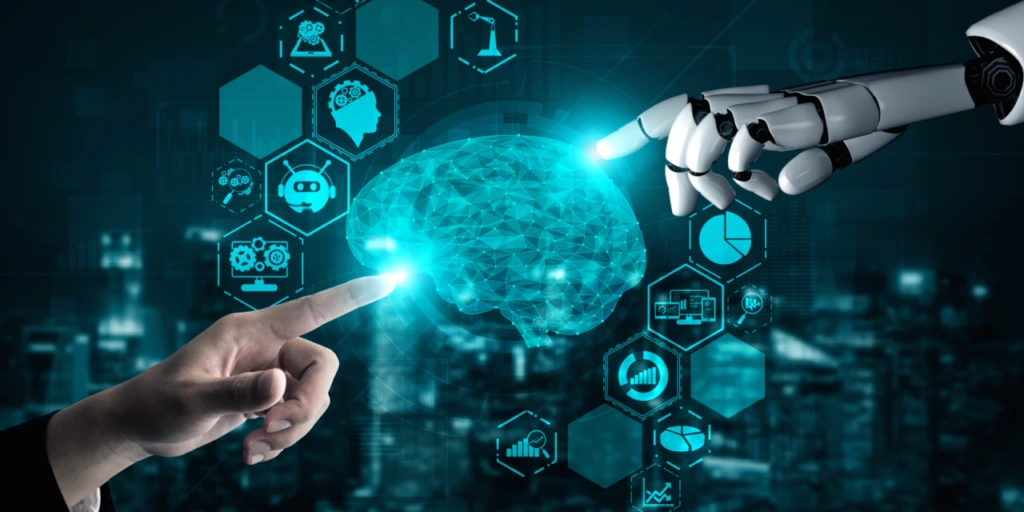
AI and automation have gone from ancillary to imperative for enterprise systems. Manufacturing and banking can improve efficiency and productivity and do so at lower costs thanks to the addition of automation and AI to enterprise systems.
For example, AI can improve decision-making. Rather than doing all of the calculations for efficiency, for example, the AI is able to do massive, simultaneous calculations within seconds. AI can analyze the market and decide how to maximize company efficiency and productivity. While AI can handle the repetitive tasks of the workforce, AI and automation can handle the more complex and creative/specialized tasks.
Other than that, AI coupled with automation is transforming entire industries. For example, in manufacturing, there is essentially no downtime and improved safety with predictive maintenance and intelligent robots. Alternatively, in logistics, AI-driven automated systems optimize supply chains, deliveries become quicker, and wasteful costs are eliminated. Even healthcare is being endowed with intelligent automation for medical diagnostics, which optimizes the treatment of patients without compromising accuracy.
No less important, they also lead the way in sustainability efforts. As AI and automation minimize wastage of resources, optimize energy use, and enhance manufacturing efficiency, more environmentally friendly business models can be achieved. In this transition, profitability is not only enhanced but corporate accountability is increased in times of climatic stress.
The next era of business will revolve around collaboration between people and machines. For the first time in history, there will be no tension around machines stealing jobs. AI and automation will augment human capabilities rather than replace them. Employees will be able to be more effective, innovative. Ultimately, businesses that embrace this era will be more robust, competitive, and future-proofed.